We’ve been pretty silent over the last few weeks on sharing changelog updates, but if you’ve been following the blog, you probably spotted some exciting features and improvements we released.
This week, we’re back on track with the changelog, starting to bridge the gap from the past weeks.
Here are the latest updates you need to know:
P.S. As you might know, we’re organizing AIE Paris. If you’re around, you should definitely join. Grab a spot here.
-
New Qwen3 Next 80B A3B Instruct One Click and more
Qwen3-Next-80B-A3B is the first installment in the Qwen3-Next series, featuring strong inference speed and parameter efficiency. You can now deploy this new model on Koyeb in one click.
Gradio lets you demo your machine learning model with a friendly web interface. The Gradio library now includes native MCP server compatibility, allowing you to turn any Gradio interface into an MCP server.
Learn how to use Gradio to build an MCP server that interacts with PostgreSQL in this new tutorial.
gpt-oss-20b, part of OpenAI’s first series of open source models, is now available in our one-click deployment catalog.
Spin up a GPU-backed instance and start experimenting with this LLM.
-
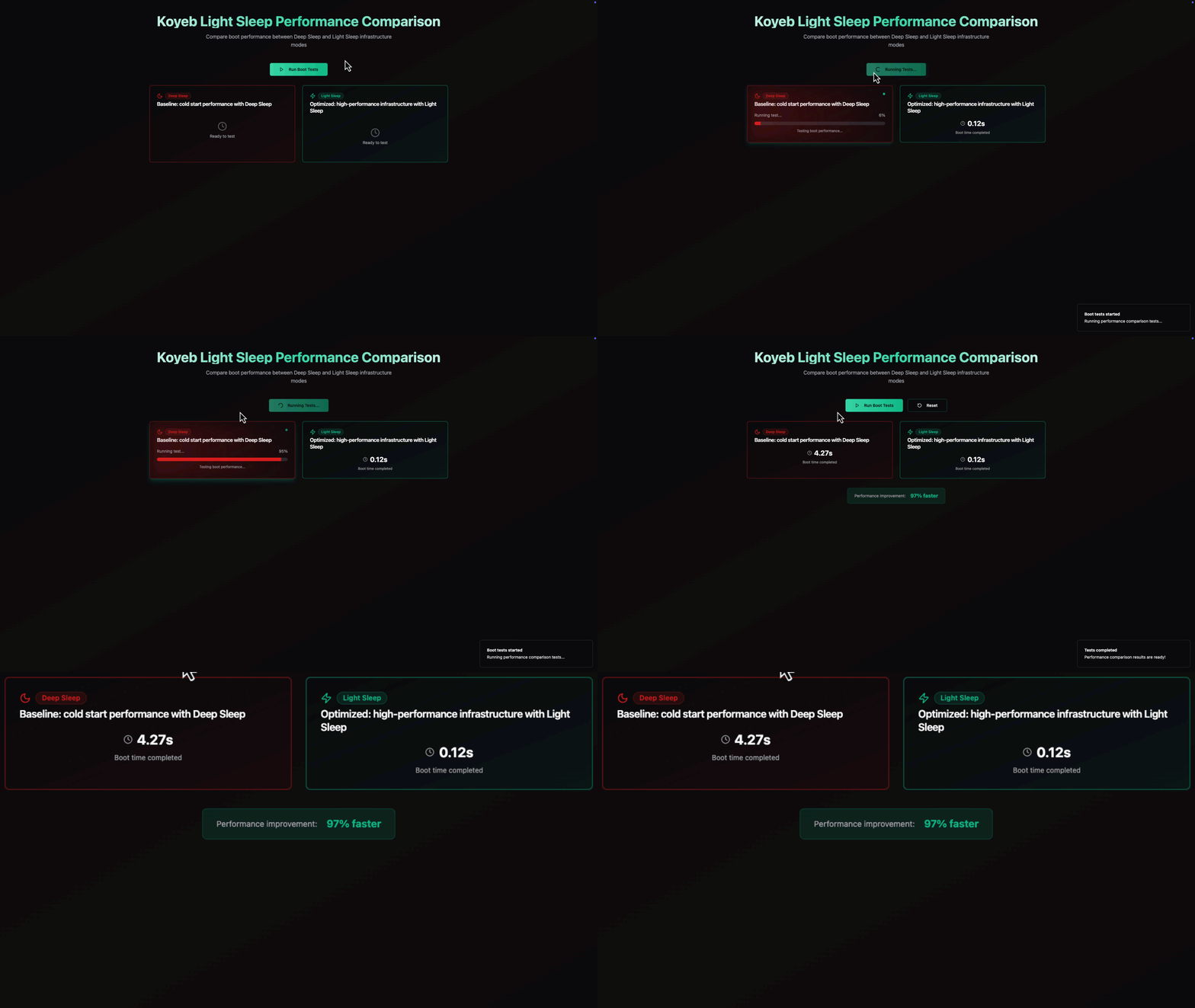
Scale-to-Zero Light Sleep: Reduce cold start to 200ms
To continue improvement of our Scale-to-Zero feature, we’ve implemented Light Sleep for CPU Instances. With Light Sleep for Scale-to-Zero, cold starts are reduced to less than 200ms, dramatically increasing the speed at which Instances wake up.
Read the blog post to find out how more about how we implemented Light Sleep.
-
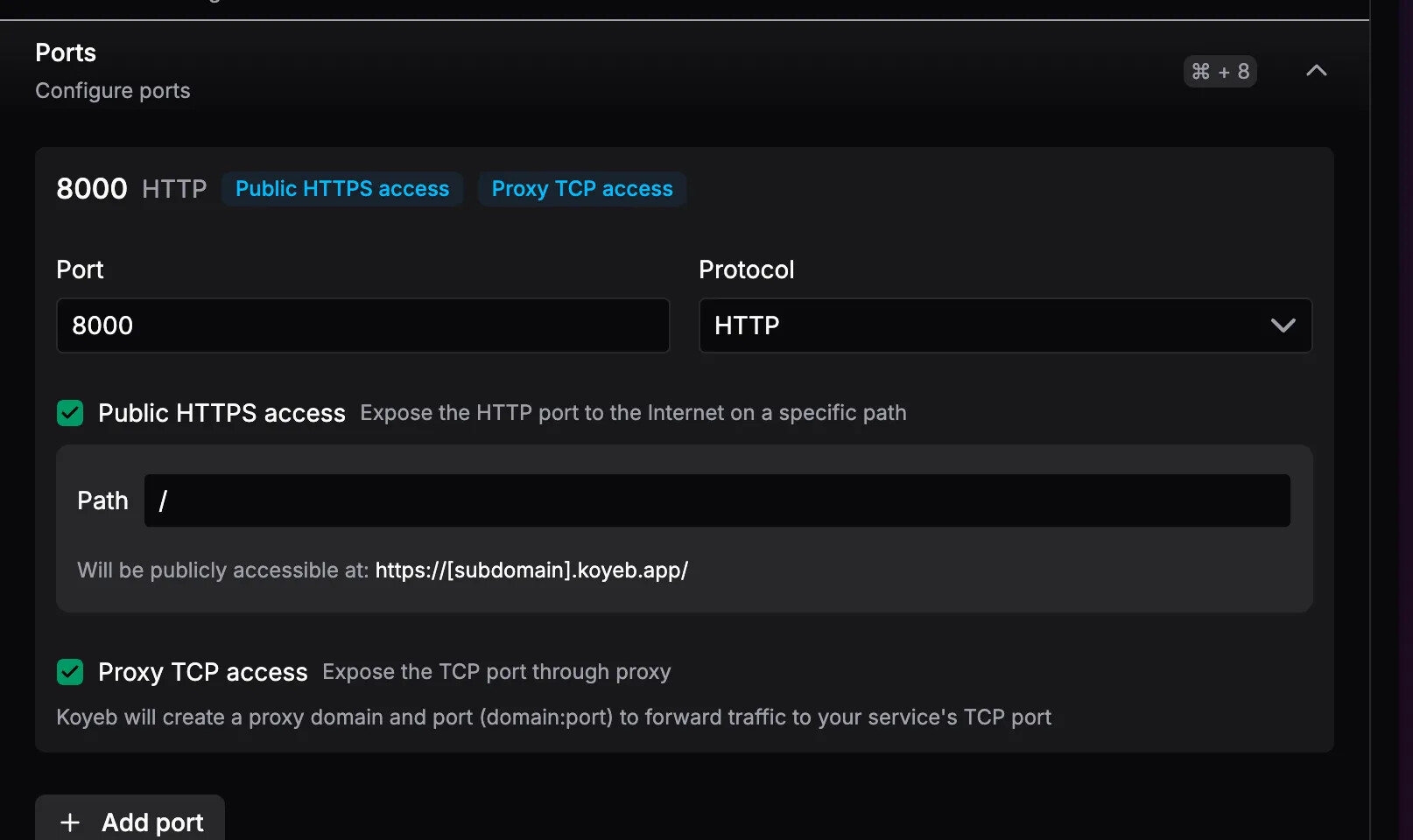
TCP Proxy: expose TCP ports publicly - now in public preview
TCP Proxy allows you to expose the TCP ports of your Koyeb services to the public Internet, enabling direct connections for protocols like SSH, database clients, and more.
To learn more, read the blog post announcement and check out the docs.
-
Resume services without triggering rebuild
You can now resume services without triggering a rebuild, avoiding unnecessary builds when resuming. This improves the experience for users who pause and resume services frequently and don’t need to rebuild.